5 Ways to Lower Your Risk of Oral Cancer
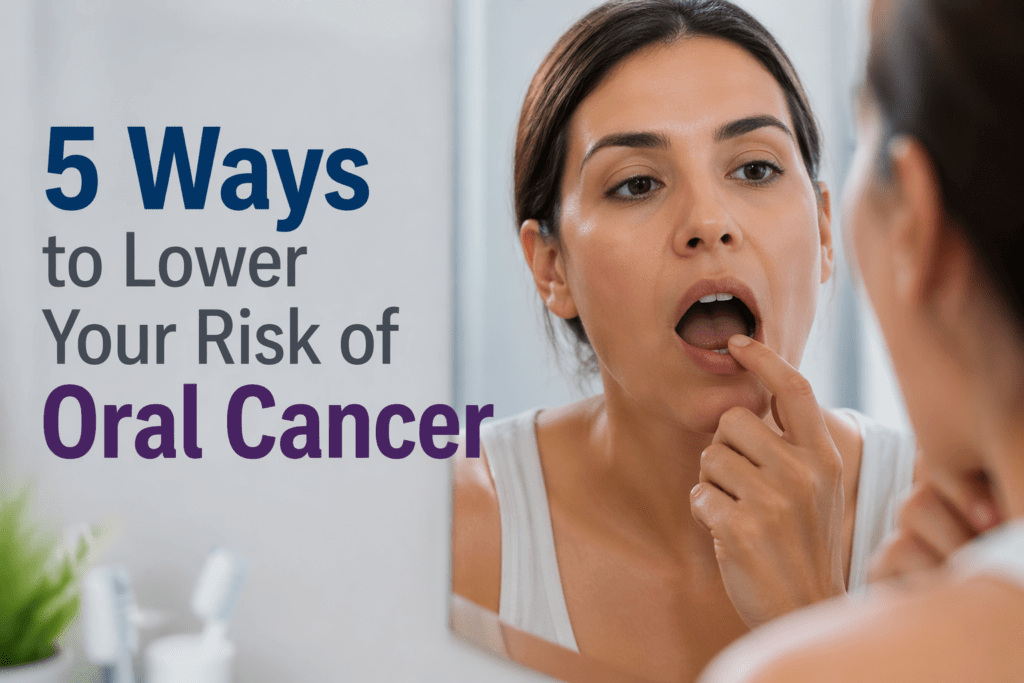
The article explains what oral and oropharyngeal cancer are, where they appear, and how they develop in the mouth and throat. It stresses that early signs are often easy to miss, which makes awareness and routine care important. Risk increases with age, but lifestyle choices play a large role. It outlines five practical ways to reduce risk, including avoiding tobacco and limiting alcohol. The piece also reviews common symptoms, treatment options such as surgery and radiation, and what recovery may involve.
Main Points
- Oral cancer begins in the mouth, while oropharyngeal cancer forms in the middle throat area
- Most cases start in the surface lining cells inside the mouth or throat
- Early signs may include sores, lumps, or red or white patches that do not heal
- Risk increases with age but can affect anyone
Common locations
- Lips and gums
- Floor of the mouth
- Under the tongue
- Roof of the mouth
- Area behind wisdom teeth
5 ways to lower risk
- Avoid all forms of tobacco, including smoking and vaping
- Limit or avoid alcohol consumption
- Reduce risk of HPV through safe practices and vaccination
- Protect lips with SPF to prevent sun damage
- Visit the dentist regularly for early detection
Symptoms to watch for
- Mouth sores that do not heal
- Lumps or thickened areas
- Persistent red or white patches
- Numbness in the tongue or jaw swelling
- Any symptom lasting more than two weeks should be checked
Treatment options
- Surgery to remove tumors and nearby tissue
- Radiation therapy using targeted high energy beams
- Chemotherapy to destroy or slow cancer cells
- Targeted therapy that blocks cancer growth signals
- Immunotherapy to help the immune system attack cancer
Recovery
- Recovery depends on treatment type and severity
- Some patients may have difficulty speaking or eating after surgery
- Ongoing follow up care is important for healing and monitoring